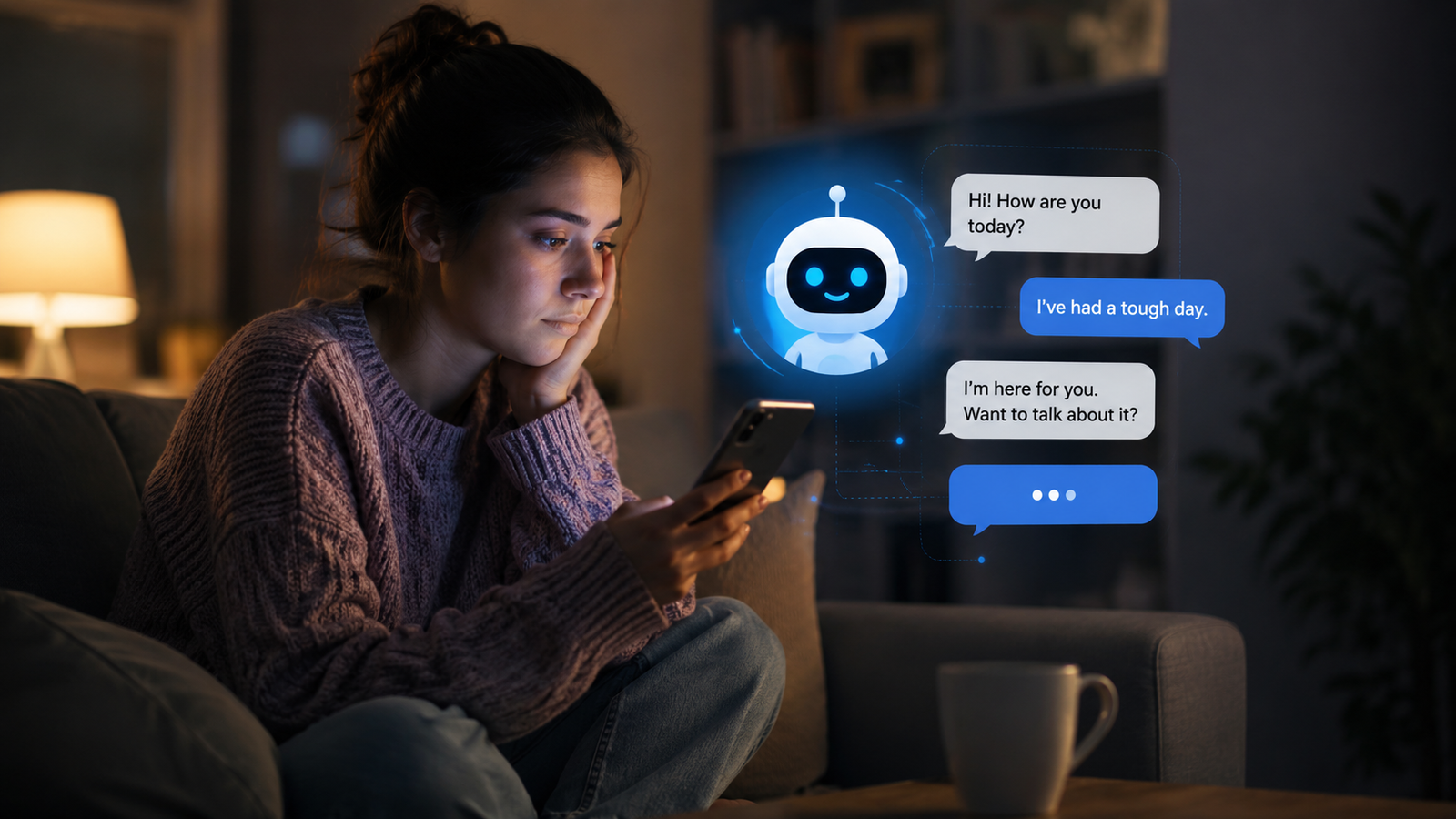
A four-week study involving more than 12,000 adults has raised fresh questions about the emotional impact of talking to AI chatbots, finding that while the conversations often felt pleasant, some users ended the study feeling lonelier and less satisfied with their lives.
The study, conducted by researchers from the Munich-based economic research institute CESifo, followed 12,365 adults in France for 28 days to examine whether personal conversations with AI could help reduce loneliness.
Participants were divided into two groups. One group regularly used an AI chatbot for personal conversations, while the other continued with their normal routines.
The results produced an unexpected picture.
People who chatted with the AI reported that their conversations felt more enjoyable than the social interactions reported by participants in the control group. But despite that short-term positive experience, the AI users also reported higher levels of loneliness, lower life satisfaction and more depressive feelings by the end of the study.
Pleasant conversations, less human contact
One of the most striking findings was that spending time talking to an AI did not necessarily translate into more real-world social interaction.
Participants who regularly engaged in personal conversations with the chatbot reported having more meals alone and spending less face-to-face time with friends and relatives each week.
Louis Fréget, one of the researchers, told Fortune that conversations with AI could potentially reinforce a person’s existing frustrations or prolong periods of rumination, making them less inclined to speak with another person afterwards.
In other words, an AI conversation may provide immediate comfort without necessarily encouraging the human connection that people need in the longer term.
Why does AI feel good but still leave people lonely?
University of Chicago behavioural scientist Nicholas Epley believes the difference comes down to what an AI conversation can actually provide.
A chatbot can respond quickly, remember details within a conversation and make users feel heard. But it cannot create the same feeling of being genuinely known by another person, according to Epley.
That distinction could explain why an interaction can feel enjoyable in the moment while failing to provide the deeper emotional connection associated with human relationships.
Research from University of Missouri–Kansas City Professor Valeria Pfeifer also points towards the limitations of digital communication. Her work suggests people now use significantly fewer words than they did two decades ago, while typed and text-based conversations can lack some of the psychological impact of deeper face-to-face interactions.
Experts do not all agree
The relationship between AI and loneliness is far from settled.
Some research has produced results that differ from the CESifo study.
One study involving first-year college students found that those who regularly interacted with an AI designed to become an “ideal friend” did not experience a significant change in their loneliness levels. Students who spoke with randomly selected human partners showed a different outcome.
Meanwhile, a pilot programme in New York involving nearly 1,000 older adults found that interacting with an AI chatbot was associated with a reduction in loneliness.
These contrasting findings suggest that the impact of AI companionship may depend on factors such as a person’s age, circumstances, existing relationships and how frequently they use the technology.
AI may support social connection — but cannot replace it
Technology companies are increasingly exploring AI as a tool for social interaction.
Meta CEO Mark Zuckerberg has argued that people want more social contact and that AI could help facilitate those connections. A KPMG survey has also found strong interest among workers in having an AI chatbot that could act as a supportive friend in the workplace.
But researchers caution against viewing AI companionship as a replacement for human relationships.
Hastings Center bioethicist Nancy Berlinger said that while an AI chatbot may provide some temporary relief from loneliness, it cannot replace the richness of real relationships.
The latest research therefore does not suggest that talking to AI is inherently harmful. Instead, it highlights a more complicated reality: an AI conversation can feel comforting and engaging while still leaving a person with less human contact.
As AI companions become increasingly common, the bigger question may not be whether chatbots can keep us company, but whether they encourage us to maintain the human relationships that matter most.