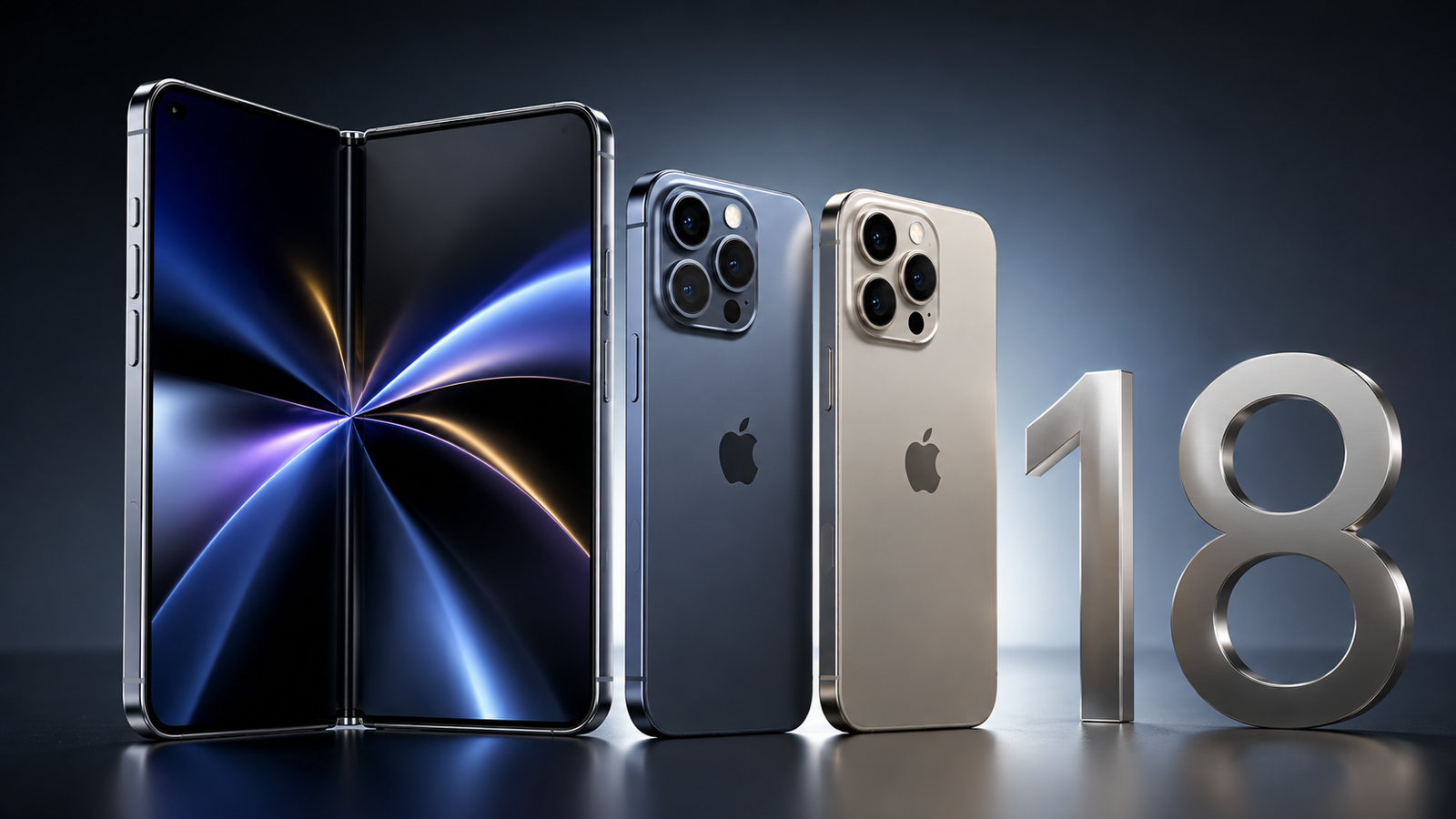
Apple could be preparing to change the way it launches its iPhone lineup, with the company reportedly planning to put its most expensive and advanced models first while delaying the regular iPhone 18.
According to several reports, Apple may introduce its first foldable iPhone alongside two high-end non-foldable models in 2026, while the standard iPhone 18 could arrive several months later, potentially in the first half of 2027.
If the plan goes ahead, it would mark a major departure from Apple’s usual strategy of launching multiple iPhone models around the same time each year.
Foldable iPhone could take the spotlight
The biggest attraction of Apple’s reported 2026 lineup would be its first foldable iPhone.
A foldable device is expected to be considerably more complicated to manufacture than a conventional smartphone. Apple would need to produce a flexible display, a specialised hinge system and a design capable of handling repeated folding without compromising durability.
Launching the foldable iPhone with other premium models could allow Apple to focus its manufacturing resources on a smaller number of high-value devices rather than trying to produce every model at once.
The strategy could also help Apple manage the expected demand for its first foldable phone, which is likely to carry a significantly higher price than standard iPhone models.
Why would Apple delay the regular iPhone 18?
One possible reason is rising production costs.
Memory chips and other materials used in smartphones have become more expensive, putting pressure on manufacturers to protect their profit margins.
By prioritising premium iPhones, Apple could potentially earn more revenue from each device sold and make better use of limited manufacturing capacity.
The approach would also allow the company to focus on customers who are willing to pay more for new features and premium hardware.
A risky move for Apple
While a premium-first strategy could benefit Apple financially, delaying the regular iPhone 18 could also create challenges.
Customers looking for a more affordable entry point into the latest iPhone generation may have to wait longer. That could give competing smartphone makers an opportunity to attract buyers who do not want to pay premium prices.
It could also change how consumers view Apple’s annual iPhone cycle, which has traditionally offered several models within the same launch window.
For now, Apple has not officially confirmed the reported launch plans.
But if the reports prove accurate, 2026 could become an important turning point for the iPhone — with Apple shifting its focus from launching a broad lineup at once to putting premium and foldable devices at the centre of its strategy.